
White hat link building means earning backlinks the right way. You create something useful. A real website links to it because it helps their readers. No tricks. No shortcuts.
Backlinks help Google decide which pages deserve to rank. So it’s tempting to grab them fast. Buy a bundle. Swap links in bulk. Spam blogs with a tool. But shortcuts like these can backfire.
White hat SEO link building is the slower, safer path. In this guide, you’ll learn how it works, which techniques to use, and how to spot a good link. You’ll also see how to pick a partner, like Outreach SEO, if you’d rather not go it alone.
What Is White Hat Link Building?
So, what is white hat link building? It’s earning links in ways that follow Google’s rules. The focus is simple. Be useful. Be relevant. Be honest.
You don’t trick Google. You give a real site a real reason to link to you. Maybe it’s a helpful guide, fresh data, or an expert quote. The editor says yes because it makes their page better.
One note. No method can guarantee rankings or shield you from every Google update. Following the rules lowers your risk. It doesn’t erase it. Anyone who promises more is selling something.
What Are White Hat Links?
White hat links are links you earn through real value. Think of an editorial link from a news site, or a link inside a helpful paragraph on a blog in your niche. Each one helps the reader. That’s the test.
How Does White Hat SEO Link Building Work?
It’s a simple loop:
- Create something worth linking to.
- Find relevant sites your audience reads.
- Get to know the editors.
- Send personal, manual outreach.
- Let the editor decide.
- Track the results, then repeat.
Why Is White Hat Link Building Important for SEO?
Shortcuts are a gamble. White hat link building plays the long game. For the full backstory, see our guide on why backlinks are important for SEO. Here’s why doing it right wins:
- Authority. Links from respected sites in your field build trust with readers and Google.
- Rankings. Relevant links help search engines understand your page. They work best with strong content and solid technical SEO.
- Traffic. People click links. Visitors from a relevant page already care about your topic.
- Steady growth. Earned links tend to stick, so you worry less about the next update.
- Brand reach. Each feature puts your name in front of new people. Every editor you help becomes a future contact.
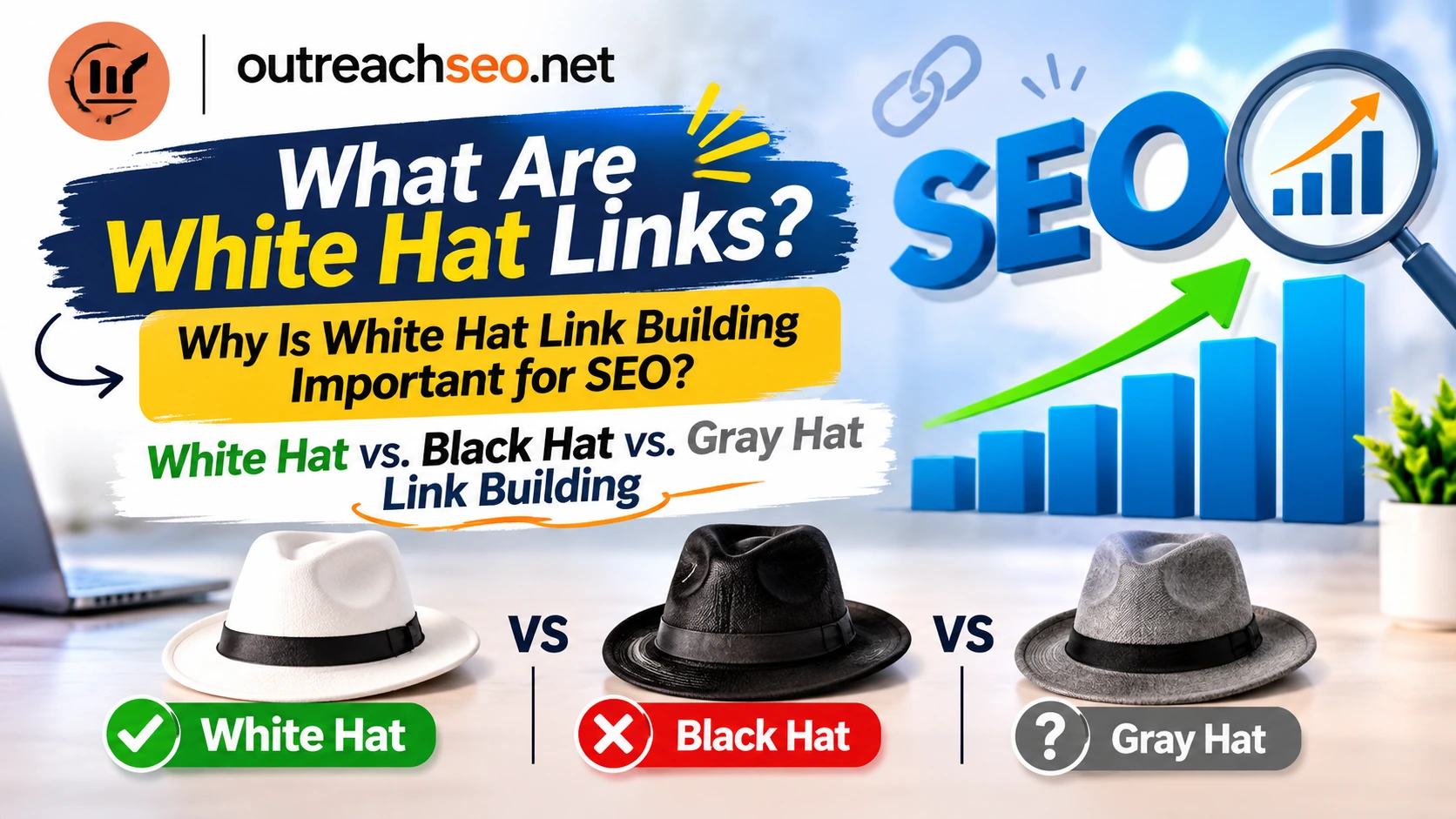
White Hat vs. Black Hat vs. Gray Hat Link Building
| Factor | White Hat | Gray Hat | Black Hat |
| Approach | Ethical, editorial | Borderline | Manipulative |
| Links | Earned through value | Questionable tactics | Schemes and tricks |
| Outreach | Personal and honest | Often transactional | Automated |
| Risk | Lower when compliant | Higher | High |
| Long term | Strong | Uncertain | Poor |
What Makes Black Hat Link Building Risky?
Black hat tactics try to game the system, and Google calls many of them link spam. Common ones include buying links that pass ranking credit, private blog networks (PBNs), automated link tools, spammy directories, and endless link swaps. The short-term boost can tempt you. The long-term cost can be a ranking drop or a manual action.
Is Gray Hat Link Building Safe?
Not really. Gray hat sits in the fuzzy middle. Guest posting is the classic case. One thoughtful article on a relevant site is great. Hundreds of low-effort posts just for links? That’s a scheme. Try this test: would you do it if search engines didn’t exist?
10 Effective White Hat Link Building Techniques
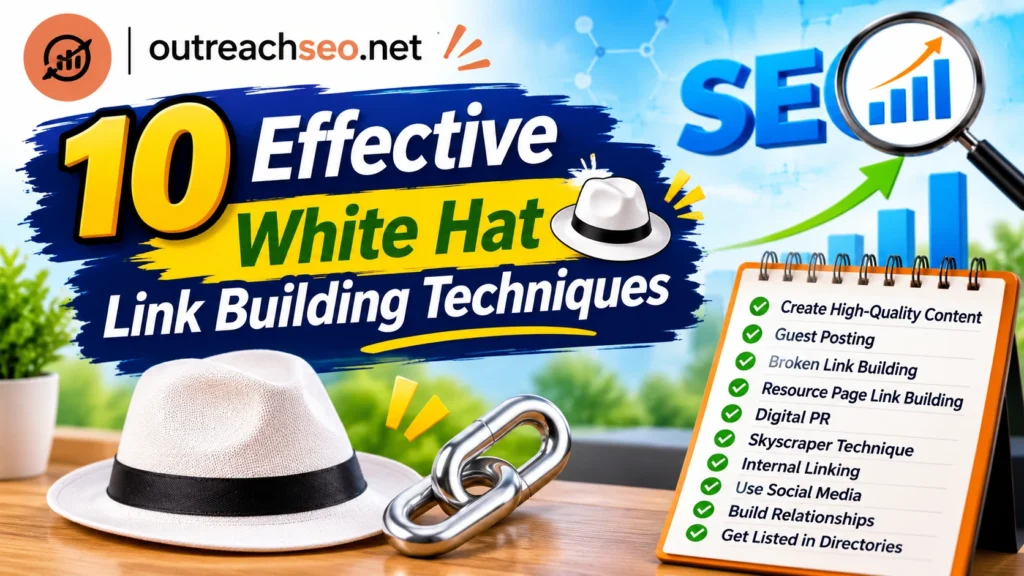
Pick two or three to start. You don’t need all ten.
1. Guest Posting on Relevant Sites
Write a useful article for a site your audience reads. Teach something real. Add your link only where it helps the reader. Skip blogs that accept anything. Need help? Our guest posting services cover research, writing, and placement.
2. Digital PR and Media Outreach
Journalists need stories. Share original data or a timely angle, and pitch it to the right reporter. If they run it, you may earn a link from a trusted outlet.
3. Resource Page Link Building
Many sites keep a page of helpful links. Find ones in your niche. Then explain, briefly, why your content helps their readers.
4. Broken Link Building
Sites break links all the time. Spot a dead link, then offer a working page that fits as a fix. The link is a bonus, not a demand.
5. Linkable Asset Creation
Create content made to be cited. Original research, industry stats, free calculators, and detailed guides all work. Make them easy to quote.
6. The Skyscraper Technique
Find popular content that earns links. Build a newer, clearer, more complete version. Then show it to sites that link to the old one. Be polite. Don’t trash the original.
7. Unlinked Brand Mention Reclamation
Set up alerts for your brand name. When a site mentions you without a link, send a friendly note and ask. It’s one of the easiest wins.
8. Expert Contributions
Reporters and bloggers often ask for expert quotes. Answer fast with something useful. If they use it, you often get a credit and a link.
9. Relationship-Based Link Building
Join the communities your industry hangs out in. Share others’ work. Offer help without asking for anything. People link to people they know.
10. Competitor Backlink Gap Analysis
Check who links to your competitors. If a relevant site links to three rivals but not you, make something better and reach out.
How to Build White Hat Backlinks Step by Step
Techniques need a plan. Here’s a simple one for white hat backlink building:
- Set goals. Pick a few target pages and keywords. “Ten quality links in three months” beats “a million links, fast.”
- Research sites. Check topic fit, real readers, and editorial standards. If a site fails, move on.
- Create link-worthy content. Find what your audience needs. Then make the best answer on the web.
- Do manual outreach. Use the editor’s name. Say why your content fits. Keep it short. Follow up once or twice, then let it go.
- Earn the link naturally. Don’t push for exact anchor text. If a placement is paid, mark it as sponsored, as Google asks.
- Monitor. Track new and lost links, referral traffic, and rankings. A monthly check is enough.
How to Identify High-Quality White Hat Backlinks
No single score tells the whole story. Look for these signs:
- Relevance. The site covers topics close to yours.
- Credibility. Real authors, real readers, real standards.
- Audience. Steady organic traffic from people you want to reach.
- Context. The link sits in helpful content, not a footer.
- Natural anchor text. Descriptive words, not the same exact keyword every time.
- Variety. Ten sites linking once beat one site linking ten times.
Dofollow, nofollow, and sponsored tags tell Google how to treat a link. Don’t assume every good link must be dofollow. A nofollow link on a respected site can still bring traffic and brand value. And Google doesn’t use scores like DR or DA as ranking factors. Treat them as a rough guide.
Want to understand the different link attributes and backlink types? Read our guide to types of backlinks.
White Hat Link Building Mistakes to Avoid
Even good intentions can go sideways. Avoid chasing quantity over quality, linking from irrelevant sites, sending mass automated outreach, overusing exact-match anchors, publishing thin guest posts, buying links that pass ranking credit, building links too fast, and never checking your links.
How to Measure the Success of a White Hat Link Building Campaign
Track relevant referring domains, link quality, keyword rankings, organic traffic, referral traffic, brand mentions, and conversions. Results take time, so watch trends over months, not days. Google Search Console is free and shows who links to you. Ahrefs, Semrush, and Majestic add depth. Google Analytics 4 shows referral traffic.
Should You Hire a White Hat Link Builder or Do It Yourself?
DIY gives you control and lower direct costs. But it takes time: research, writing, outreach, and follow-up. Consider hiring a white hat link builder if your team is small, you want to scale outreach, or you don’t have publisher contacts yet. A pro finds and qualifies sites, plans content, runs manual outreach, coordinates placements, and reports on every link.
How to Choose a White Hat Link Building Services Agency
Some agencies do great work. Others sell cheap links and hope you won’t look closely. Ask these questions:
- What’s your process? Real outreach to relevant sites is a good sign.
- Can I see the sites? Check for real traffic and real content.
- Do you have case studies? Look for honest results and live examples.
- What’s included? Research, content, outreach, and placement reports should be clear.
Run from guaranteed rankings. No honest agency can promise a #1 spot or a penalty-proof result.
White Hat Link Building Services: What to Expect
A solid white hat backlink service handles prospecting, manual outreach, content writing, quality checks, and clear reporting. Here’s the key difference. Paying for the work is fine. Paying for a link that passes ranking credit is the risky part. A good white hat backlink agency never promises an editor’s decision.
Why Choose Outreach SEO?
At Outreach SEO, we focus on guest posting, link building, and content writing. We’ve delivered 5,000+ placements across 2,000+ vetted sites for 1,000+ clients. Every placement starts with manual outreach to relevant sites, and you get clear placement reports. We don’t promise miracles. We do the work right.
Explore our link building services →
Final Thoughts: Build Sustainable Rankings With White Hat Link Building
White hat link building isn’t flashy. It’s steady, honest work that holds up over time. Focus on relevance, quality, and real readers, and the links will follow. Skip the shortcuts. Want help? Talk to our team about white hat link building. →
White Hat Link Building FAQs
1. What is white hat link building in SEO?
It’s the practice of earning backlinks through useful content and honest outreach. You follow Google’s rules and let real editors decide. It’s the opposite of paid link schemes, spam networks, and other shortcuts.
2. What are the best white hat link building techniques?
Guest posting, digital PR, resource page outreach, broken link building, and linkable assets are all strong picks. No single tactic wins every time. Start with two or three that fit your niche, then build from there.
3. Are white hat backlinks safe for Google rankings?
They’re much safer than manipulative links, because they follow Google’s guidelines. But nothing in SEO is risk-free. Anyone promising guaranteed rankings or a penalty-proof result isn’t being straight with you.
4. How do I get white hat backlinks to my website?
Start by creating content worth linking to. Then find relevant sites, send a personal pitch, and let the editor decide. Track what you earn, learn from it, and repeat.
5. How long does white hat link building take to show results?
It depends. Competition, site strength, content quality, and how fast Google indexes the link all play a part. Some sites see movement in a few months, while others need longer, so be wary of any fixed promise.
6. Are guest posts white hat link building?
They can be. One useful article on a relevant site, written for real readers, is a fair way to earn a link. Mass guest posting just to collect links can break Google’s link spam rules.
7. How much do white hat link building services cost?
Prices vary with research, content, outreach effort, site quality, and reporting. Real outreach takes real time. So be careful with very cheap offers, since they often cut corners.
8. How can I find a reliable white hat backlink agency?
Look for clear methods, relevant sites, honest reporting, and realistic promises. Ask for live examples and a sample site list. A good agency will welcome your questions, not dodge them.
9. Can white hat link building help a new website?
Yes. White hat link building helps new websites build credibility and get noticed by relevant audiences. Start with useful content, targeted outreach, and links from websites in your niche.
10. How often should you build white hat backlinks?
There is no fixed number of backlinks you need to build each month. Focus on earning relevant links consistently rather than chasing a monthly target. A steady, quality-focused approach is better than a sudden burst of low-quality links.