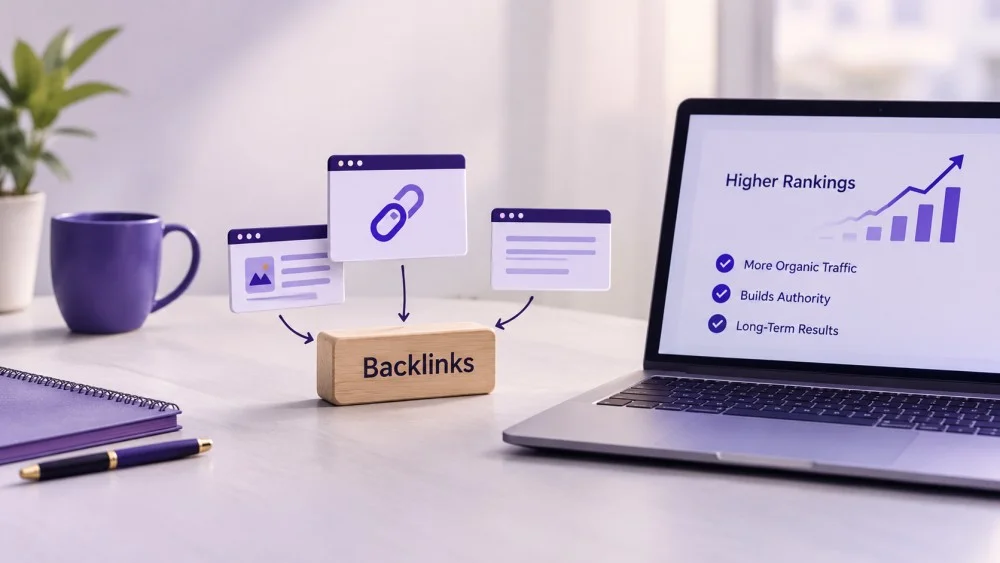

Why are backlinks important? Backlinks are important because they act as votes of trust from other websites. Google uses them to judge which pages deserve to rank. More quality backlinks usually mean stronger website authority, better search engine rankings, and steady organic traffic growth.
That’s the short answer. The full story is more interesting.
You’ve probably heard two opposite claims. One says you can’t rank without links. The other says links are dead. Both are wrong. Below, you’ll see what backlinks really do, how much they matter in 2026, and how to tell a good link from a bad one.
What Are SEO Backlinks?
A backlink is a link from another website to yours. If a blogger mentions your guide and adds a clickable link, that link is a backlink to you. You may also hear them called inbound links or incoming links.
Think of it like a recommendation. If three trusted friends say a restaurant is great, you’ll likely try it. Google thinks the same way. When trusted sites point to your page, Google reads it as a sign that your page is worth showing.
What are SEO backlinks examples?
Backlinks come in many forms. Here are the most common ones:
- Editorial link: A writer links to your article or study because it helps their readers.
- Guest post link: You write a useful article for a relevant site, and it links back to you.
- Resource page link: A site lists helpful tools or guides, and yours is one of them.
- Brand mention link: A news story or roundup names your company and links to your site.
- Nofollow link: A link that asks Google not to pass credit. It can still send visitors.
Some links are better than others. We’ll get to that.
Why Are Backlinks Important for SEO?
The backlinks importance in SEO comes down to five points:
- They help you rank. Google treats links as a trust signal.
- They help Google find your pages. Crawlers follow links from site to site.
- They build trust. A link from a respected site rubs off on you.
- They bring real visitors. People click links, and those clicks are free traffic.
- They grow your brand. More mentions mean more people know your name.
Let’s look at each one.
1. Backlinks help your search engine rankings
This is the big one. Google was built on links. Its original system, PageRank, treated links between sites like votes. Pages with more votes from credible sources ranked higher. Almost 30 years later, links are still part of how Google works.
The data backs it up. Backlinko analyzed 11.8 million search results and found the #1 result has 3.8 times more backlinks than pages ranked #2 through #10. That’s a correlation, not proof of cause. But it’s a strong pattern.
2. Google backlinks help search engines discover your content
Google can’t rank a page it hasn’t found. When Googlebot follows a link to a page it hasn’t seen before, that’s often how the page gets indexed for the first time. So links don’t only pass trust. They also open the door.
3. Backlinks build website authority
Website authority is how credible and trusted your site looks. Every good link adds a little. Over time, those links add up to a site that Google feels safe recommending.
4. Backlinks send referral traffic
Not every benefit is about Google. A link on a busy, relevant page can send real readers to you. These visitors arrive with interest already built in. They were reading about your topic, and they clicked.
5. Backlinks raise brand awareness
Each link is a small billboard. People who’ve never heard of you see your name in a trusted place. Next time they search, they may remember it.
How Can Backlinks Improve SEO?
Here’s how the process works, step by step:
- A relevant, trusted site links to your page.
- Google finds that link and reads the context around it.
- Google sees your page as more credible on that topic.
- Your page can move up in search results.
- Higher rankings bring more clicks, which means more organic traffic growth.
The keyword is relevant. A link about running shoes won’t help a plumbing site much. A link from a plumbing blog will. That chain is how backlinking benefits SEO in real life.
Advantages of Backlinks: The Benefit of Backlinking That Lasts
The biggest benefit of backlinking is that it compounds. Ads stop the moment you stop paying. A good link can keep working for years.
- It keeps paying off. One strong placement can send visitors and trust long after the day it went live.
- It lifts the whole site. When your domain gains trust, new posts often start with a head start.
- It helps your other marketing. Shoppers who recognize your name from a trusted site tend to feel safer clicking, signing up, or buying.
Are Backlinks a Google Ranking Factor? (SEO Ranking Factors Explained)
Yes, links are one of Google’s many SEO ranking factors. But they aren’t the only one, and they aren’t always the biggest.
Google has said so openly. Gary Illyes told a conference that people overestimate links, and he doesn’t agree they’re in the top three factors. Google’s own documentation also changed in 2024. The word “important” was removed from a sentence about links as a ranking factor. Illyes has even said a site with no links at all can rank, in rare cases, such as a page Google found only through its sitemap.
So what does that mean for you? It means links work best alongside other things. Helpful content, a good user experience, and a trusted brand all count too. Links are one strong signal in a bigger mix.
Are Backlinks Still Relevant? How Important Are Backlinks in 2026?
Yes, backlinks are still relevant in 2026. They’re just not the whole game anymore.
Here’s what has changed.
AI search has joined the picture.
Tools like Google’s AI Overviews now answer questions directly. Links still matter there, but in a different way. An Ahrefs study found 76.10% of pages cited in AI Overviews also rank in Google’s top 10 results. Rank well first, and you’re more likely to be cited.
Brand mentions matter more.
An Ahrefs study of 75,000 brands found web mentions correlated with AI Overview visibility at 0.664, ahead of backlinks at 0.218. In plain words, being talked about across the web helps a lot. Links still count. But mentions count too.
Nofollow links aren’t useless.
A Semrush study of 1,000 domains found nofollow links performed almost identically to dofollow links for AI visibility. Where a link comes from matters more than its label.
SEO pros still believe in links.
Around 73.2% of SEO professionals say backlinks continue to affect AI search visibility. That’s opinion, not proof, but it shows where the industry stands.
The bottom line for 2026: Earn quality backlinks and real brand mentions. Do both.
What Is Backlink Value? What Makes Quality Backlinks Different
Not all links are equal. Backlink value depends on the source and the context. One strong link can beat a hundred weak ones.
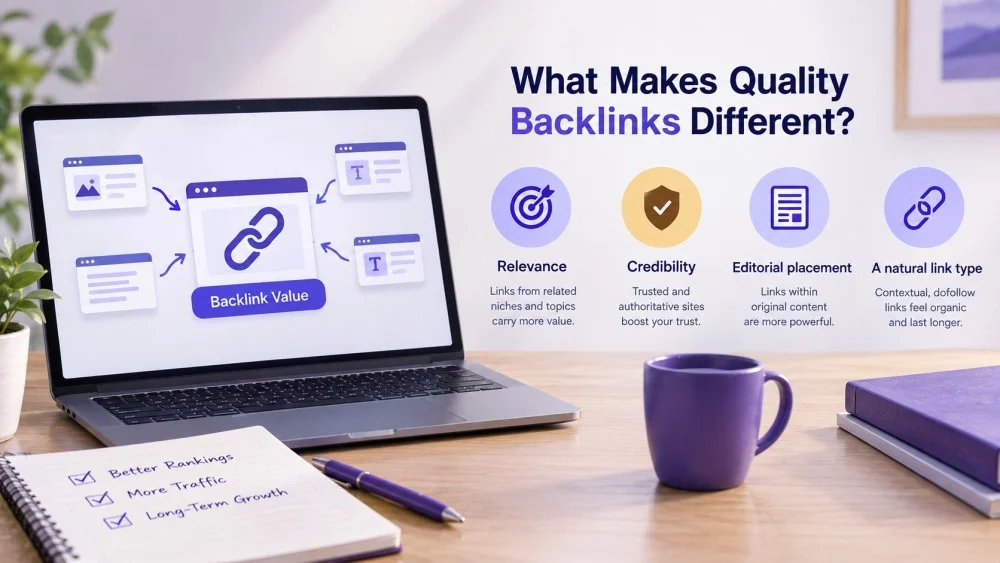
The four signs of quality backlinks
- Relevance. The linking page covers a topic close to yours.
- Credibility. The site has real readers, real authors, and real standards.
- Editorial placement. The link is there because it helps readers, not because it was bought or swapped.
- A natural link type. Dofollow, nofollow, and sponsored links each have a place in a healthy mix.
A note on domain authority
You’ll often hear about domain authority (DA) or domain rating (DR). These are scores made by SEO tools. Google does not use them. Treat them as a rough guide, not a rule. A site with a modest score but a perfect topic match can be a better source than a big site with no connection to you.
Link popularity: count the sites, not just the links
Link popularity is how many different sites link to you. Ten links from one site count far less than one link each from ten sites. Backlinko’s study found the number of sites linking to a page tracked with rankings more closely than any other factor it tested. So aim for variety.
Backlinks Good or Bad? The Truth About Backlinks
Backlinks are good when they’re earned and relevant. They’re bad when they’re fake, forced, or bought in bulk.
Google has rules against link schemes. An undisclosed paid link left as a standard link breaks Google’s spam policies and risks a manual penalty. Excessive link swaps (“you link to me, I’ll link to you”) fall in the same bucket.
What about guest posts? They’re a gray area. A well-written piece on a relevant, respected site is a fair way to earn a link. The same tactic spread across random sites, purely for links, is what Google calls a scheme. The difference is relevance, quality, and intent.
So here’s the honest truth about backlinks. They help a lot when done right. They can hurt when done carelessly. The method matters as much as the link.
How to Start Earning Backlinks
You don’t need a huge budget to begin. These three routes work well:
- Create something worth citing. Original data, free tools, and clear guides give writers a reason to link.
- Become a helpful source. Answer expert requests from reporters and bloggers. If they use your quote, you may get a link.
- Reach out for relevant placements. Offer useful guest articles to sites your audience already reads.
Go slow and stay steady. A rush of weak links does more harm than good.
Backlinks FAQ: Quick Answers to Common Questions
How long do backlinks take to work?
Most new backlinks start to affect rankings in about 4 to 12 weeks. Google first has to find the linking page, crawl it, and judge the link. For tough keywords, you may wait six months or more, and steady link building during that time matters. Some studies put the average near 10 weeks, but every site is different.
How many backlinks do I need to rank on page one?
There is no fixed number. The right target is whatever the pages already ranking for your keyword have. Check how many different sites link to each top result, then aim to match that range with links of similar quality. A low-competition topic may need only a handful, while a crowded one needs far more.
How can I check my backlinks for free?
Start with the Links report in Google Search Console. It shows which sites link to you and which pages earn the most links. Free tools like Backlinko’s backlink checker give a second view, and paid tools such as Ahrefs or Semrush add history and competitor data. Look at your list every month or two so you can spot new wins and strange links early.
What is the difference between a backlink and an internal link?
A backlink comes from a different website and points to yours. An internal link connects two pages on your own site. Backlinks build trust from the outside, while internal links help Google and readers move around and see how your pages relate. You need both, because strong outside links do less for you if your own pages don’t pass that strength along.
Should I disavow backlinks?
Usually not. Google’s systems are built to ignore most spammy links, so you rarely need to act on them. The disavow tool is meant for bigger problems, like a manual action or a large pile of spammy links that you or a past agency built. If you’re unsure, try to get the link removed first, and treat disavowing as a last step.
Is it worth paying for backlinks?
Paying for the work is fine. Paying for the link itself is risky. Reputable services charge for research, writing, and outreach to real sites, and no honest provider can promise an editor’s decision. Be wary of guaranteed rankings, hundreds of links overnight, or sites that accept anyone’s money, and always ask to see the sites before you pay.
Do backlinks matter for small and local businesses?
Yes, but you usually need fewer, and they should be local. Links from your chamber of commerce, local news, suppliers, and community groups show Google you’re a real business in a real place. They also send nearby customers to your site. A small set of relevant local links can go a long way before you chase big national sites.
What is a good domain authority score?
There is no universal good score. Each tool calculates its own number, and Google doesn’t use domain authority. Compare your score with the sites that compete for your keywords instead. If your rivals sit around 30 to 40 and you’re at 25, that gap is reachable, so watch the trend over time rather than one number.
What is anchor text, and how should I use it in backlinks?
Anchor text is the clickable words in a link. For backlinks, it might be your brand name, a page title, or a few descriptive words. A natural mix looks best, because repeating the same exact keyword on every link can look forced. You rarely control the anchor text on links you earn, so don’t obsess over it.
Do social media links count as backlinks?
Technically yes, since a link from a social profile or post points to your site. But most platforms mark outbound links as nofollow, so they pass little or no direct ranking credit. Their value is indirect: more people see your content, and some of them may link to it from their own sites. Think of social as a way to spread content, not as a link building method.
Final Thoughts
Now you know why backlinks are important: they turn good content into trusted content. Links alone won’t fix weak pages. But they give strong pages the chance to be found, believed, and shared.
Want expert help building quality backlinks? Outreach SEO focuses on guest posting, link building, and content writing. With 5,000+ placements across 2,000+ vetted sites for 1,000+ clients, we know what a good link looks like.