

Creating great content is important, but it is not always enough to rank on Google.
Many websites publish helpful articles, optimize their pages, and still struggle to get traffic. One major reason is that they lack authority.
This is where link building comes in.
So, what is link building?
Link building is the process of earning links from other websites that point to your own website. These links are called backlinks. When trusted websites link to your content, search engines see it as a signal that your website is valuable and trustworthy.
Think of backlinks like recommendations.
If several respected websites recommend your business, people are more likely to trust you. Search engines work in a similar way. Quality backlinks can help improve your website’s authority, visibility, and organic rankings.
In this guide, you will learn:
- What link building means in SEO
- How SEO backlinks work
- Why backlinks are important
- How link building helps websites rank
- Different types of backlinks
- How to create a simple backlink strategy
What Is Link Building In SEO?
Link building in SEO is the process of getting other websites to link to your website.
A backlink is simply a hyperlink from one website to another.
For example:
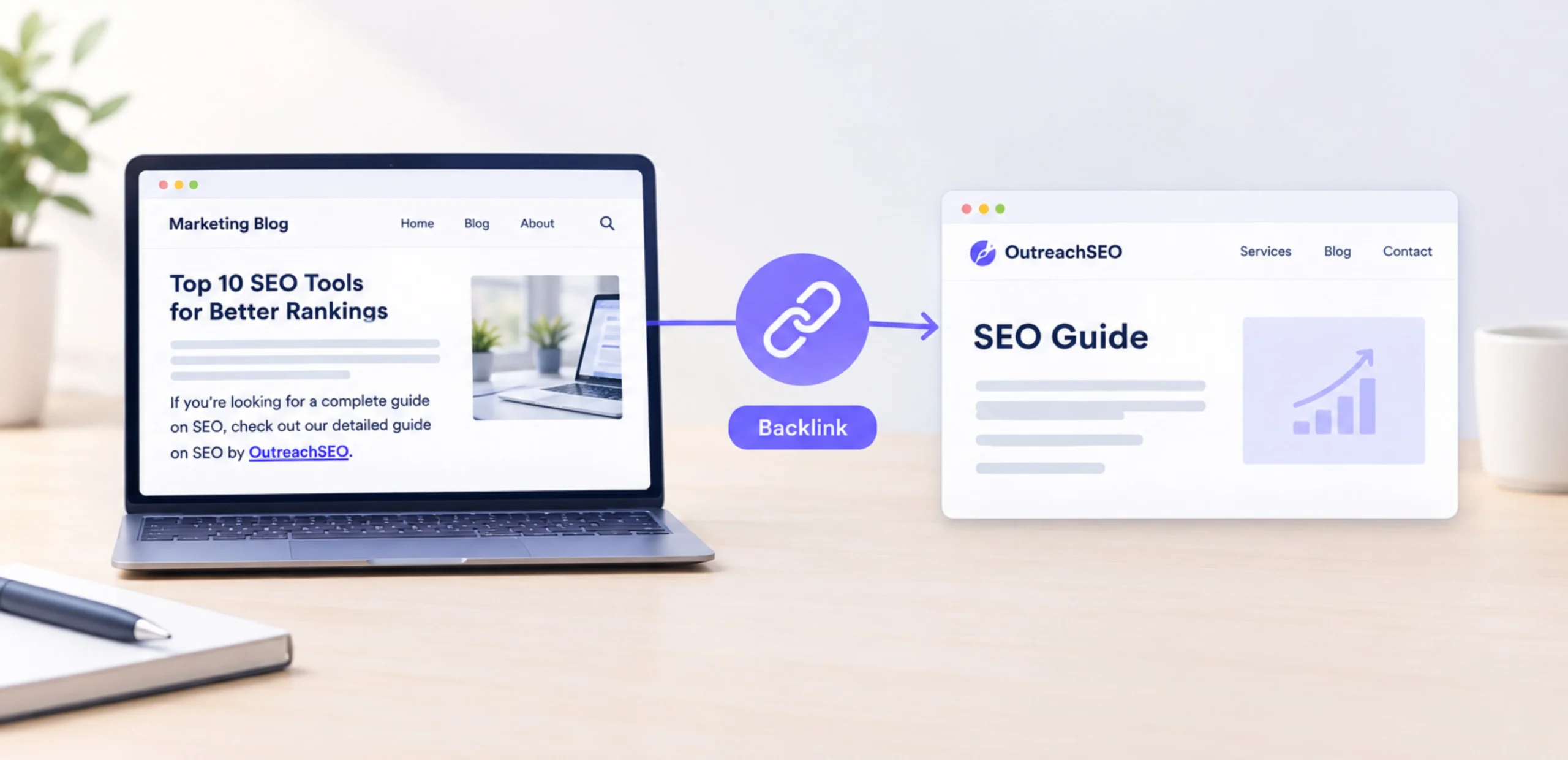
A marketing website writes an article about SEO tools. Inside that article, they mention your SEO guide and add a link to your website.
That link is a backlink for your website.
In simple words:
Link building is the practice of earning links from other websites to improve your website’s authority and search visibility.
Search engines use links to understand how websites are connected. When multiple trusted websites link to a page, it can indicate that the content provides useful information.
However, modern SEO is not about collecting as many links as possible.
The focus is on:
- Relevant links
- Trusted websites
- Natural placements
- Helpful content
A single backlink from a respected website in your industry can be more valuable than dozens of low-quality links.
Understanding SEO Backlinks
What Is A Backlink?
A backlink is an external link that points from another website to your website.
There are two websites involved:
| Website | Role |
| Website linking to you | Referring website |
| Website receiving the link | Target website |
Example:
A business blog links to your article about SEO strategies.
The business blog gives you a backlink.
Why Do Search Engines Care About Backlinks?
Search engines use backlinks as one of many signals to evaluate websites.
A backlink can help search engines understand:
- Whether your content is trustworthy
- Whether your website has authority
- Whether your information is useful
- Whether your site deserves more visibility
This does not mean every backlink improves rankings.
A backlink from an unrelated or low-quality website may provide little value.
A strong backlink usually comes from a website that is:
- Relevant to your topic
- Trusted by users
- Publishing useful content
- Receiving real visitors
How Does Link Building Work?
Many beginners think link building means simply asking websites for links.
That is only one small part of the process.
A successful link-building campaign usually involves research, content, outreach, and relationship building.
Here is how link building works step by step.
1. Find Relevant Link Opportunities
The first step is finding websites that could naturally link to your content.
These may include:
- Industry blogs
- News websites
- Resource pages
- Business directories
- Partner websites
- Educational websites
The goal is not to find any website.
The goal is to find the right websites.
For example:
A fitness website should ideally earn links from:
- Health blogs
- Fitness publications
- Nutrition websites
A link from an unrelated website may not carry the same value.
2. Create Content Worth Linking To
People rarely link to content that does not provide value.
Before building backlinks, you need something worth sharing.
Link-worthy content often includes:
- Detailed guides
- Original research
- Case studies
- Industry statistics
- Helpful tutorials
- Expert insights
For example:
A detailed guide explaining “How To Improve Local SEO Rankings” has a better chance of earning links than a short article with basic information.
3. Reach Out To Relevant Websites
After finding opportunities, the next step is outreach.
This involves contacting website owners, editors, or bloggers and explaining why your content may be useful for their audience.
Common outreach methods include:
- Guest posting
- Blogger outreach
- Resource page outreach
- Digital PR campaigns
- Content partnerships
Good outreach focuses on building relationships, not sending mass emails.
4. Earn Quality Backlinks
The goal is to earn backlinks naturally.
Some common ways to build links include:
| Method | How It Works |
| Guest posting | Publish useful content on another website and earn a link. |
| Digital PR | Get mentioned by publications and media websites. |
| Resource links | Get included in useful industry resources. |
| Blogger outreach | Build relationships with relevant website owners. |
| Content promotion | Share valuable content with the right audience. |
5. Track And Improve Results
Link building is not a one-time activity.
A good backlink strategy requires monitoring.
Important things to track include:
- New referring domains
- Website authority growth
- Keyword rankings
- Organic traffic
- Link quality
The goal is not just getting links.
The goal is building long-term search visibility.
Why Are Backlinks Important For SEO?
Backlinks remain an important part of SEO because they help search engines understand trust and authority.
Here are some key benefits of backlinks.
1. Backlinks Can Improve Organic Rankings
One of the biggest reasons businesses invest in link building is better search visibility.
When authoritative websites link to your content, it can strengthen your website’s reputation.
This can help your pages compete for valuable search terms.
However, rankings depend on many factors, including:
- Content quality
- Search intent
- User experience
- Website structure
- Technical SEO
- Backlink profile
Backlinks work together with other Google ranking factors.
2. Backlinks Build Website Authority
Website authority refers to how trustworthy and reliable a website appears.
When respected websites mention your content, it can increase your credibility.
For example:
A small marketing website receiving a backlink from a popular industry publication may gain more trust.
Authority is built over time through:
- Helpful content
- Quality backlinks
- Positive user experience
- Industry recognition
3. Backlinks Can Bring Referral Traffic
Backlinks are not only useful for search engines.
They can also bring real visitors.
Imagine someone reading an article on a popular website. They see a link to your guide and click it.
That visitor may:
- Read your content
- Subscribe to your newsletter
- Contact your business
- Become a customer
A good backlink can create value beyond rankings.
4. Backlinks Help Search Engines Discover Content
Search engines use links to discover and understand websites.
When a new page receives links from other websites, it can help search engines find that content.
This is especially useful for:
- New websites
- New blog posts
- Important service pages
Types Of Backlinks In SEO
Not all backlinks are the same.
Different types of backlinks have different levels of value.
Understanding backlink types helps you create a smarter link-building strategy.
1. Editorial Backlinks
Editorial backlinks are links naturally placed inside content because the website owner finds the information useful.
Example:
A marketing website writes an article about SEO trends and links to your research report.
These are often considered valuable because they are earned naturally.
2. Guest Post Backlinks
Guest post backlinks come from publishing articles on other websites.
The process usually involves:
- Finding relevant websites
- Creating useful content
- Publishing the article
- Earning a contextual backlink
Guest posting works best when the content provides real value to readers.
3. Contextual Backlinks
Contextual backlinks appear naturally within the main content of a page.
Example:
A blog post about digital marketing links to your article about content strategy.
The link makes sense because it supports the topic.
Context matters because search engines look at the relationship between:
- The linking page
- The linked page
- The surrounding content
4. Resource Page Backlinks
Some websites create resource pages that link to helpful tools, guides, and articles.
For example:
A university website may have a page listing useful marketing resources.
Getting included on relevant resource pages can help improve visibility.
5. Niche-Relevant Backlinks
Niche-relevant backlinks come from websites related to your industry.
For example:
A healthcare website receiving a link from a medical publication is more relevant than receiving a link from an unrelated website.
Relevance is one of the most important parts of a strong backlink profile.
What Makes A High-Quality Backlink?
Not every backlink helps your SEO.
A common mistake beginners make is focusing only on the number of backlinks they have.
But in modern SEO, quality matters more than quantity.
A few relevant and trustworthy backlinks can be much more valuable than hundreds of random links from low-quality websites.
A high-quality backlink usually has these characteristics:
1. The Link Comes From A Relevant Website
Relevance is one of the most important factors.
A backlink should come from a website that is related to your industry or topic.
For example:
A backlink from an SEO blog to your link-building guide makes sense.
A backlink from a completely unrelated website about gardening does not provide the same value.
Google looks at the relationship between:
- The linking website
- Your website
- The content surrounding the link
Relevant links appear more natural and useful.
2. The Website Has Strong Authority
A backlink from a trusted website can carry more value.
Authority is influenced by factors such as
- Website reputation
- Quality of content
- Number of trusted references
- Organic traffic
- Industry recognition
For example:
A mention from an established marketing publication usually carries more trust than a link from a new website with little content.
However, authority is not only about numbers like Domain Rating or Domain Authority.
A smaller niche website can still provide a valuable backlink if it has:
- Relevant content
- Real visitors
- A strong reputation in its community
3. The Link Is Placed Naturally
A good backlink should feel natural inside the content.
Example:
A blog discussing SEO tools mentions your backlink research guide and links to it because it helps readers.
That is a natural placement.
Poor examples include:
- Random links added without context
- Pages created only for selling links
- Links surrounded by unrelated content
The best backlinks improve the reader’s experience.
4. The Link Comes From Useful Content
The page containing your backlink also matters.
A link from a helpful, detailed article is generally more valuable than a link from a thin page created only to host links.
Ask:
- Does this page answer a real question?
- Would users find this content useful?
- Does the link add value?
If the answer is yes, it is likely a stronger backlink opportunity.
5. The Website Has Real Traffic
Traffic is another positive sign.
A website with real visitors can provide:
- Referral traffic
- Brand exposure
- More visibility
A backlink should not only exist for search engines.
It should also help real people discover your website.
Link Building As An Off-Page SEO Strategy
Link building is one of the most important parts of an off-page SEO strategy.
Off-page SEO refers to activities that happen outside your website but influence your search visibility.
While on-page SEO focuses on improving your own pages, off-page SEO focuses on building your website’s reputation across the internet.
Major areas of off-page SEO include:
- Link building
- Digital PR
- Brand mentions
- Online reputation building
- Content promotion
- Relationship building
How Link Building Fits Into Off-Page SEO
Search engines want to rank websites that users can trust.
Backlinks act as external signals that show:
- Other websites recognize your content
- Your information is valuable
- Your website has credibility
For example:
A new website may have excellent content, but without authority signals, it can be difficult to compete with established websites.
A strong backlink strategy helps close that gap.
Common Link-Building Mistakes Beginners Should Avoid
Many websites struggle with link building because they focus on the wrong approach.
Here are common mistakes to avoid.
1. Focusing Only On The Number Of Backlinks
More links do not always mean better rankings.
A website with 20 relevant backlinks can outperform a website with 500 low-quality links.
Focus on:
- Relevance
- Quality
- Trust
- Natural growth
2. Getting Links From Irrelevant Websites
A backlink should make sense.
For example:
A software company should not build a large number of links from unrelated websites just because they are available.
Relevant links create stronger SEO signals.
3. Buying Cheap, Low-Quality Backlinks
Many websites offer thousands of backlinks at very low prices.
These links often come from:
- Spam websites
- Link networks
- Automated systems
- Low-quality directories
These types of links may create risks instead of helping your SEO.
4. Ignoring Content Quality
Good backlinks usually start with valuable content.
If your website does not provide useful information, convincing other websites to link to you becomes much harder.
Before building links, make sure you have:
- Helpful articles
- Useful resources
- Strong landing pages
- Original insights
5. Using Unnatural Anchor Text
Anchor text is the clickable text of a link.
Example:
Learn more about SEO link-building strategies.
The bold text is the anchor text.
Using the exact same keyword repeatedly can look unnatural.
A healthy backlink profile usually contains different types of anchor text:
- Brand name
- Website URL
- Natural phrases
- Topic-related terms
How To Build A Backlink Strategy For Your Website
A successful backlink strategy is not about chasing random links.
It is about creating a repeatable process.
Here is a simple beginner-friendly approach.
Step 1: Create Valuable Content
Start with content that people actually want to reference.
Examples:
- Complete guides
- Research articles
- Industry statistics
- Case studies
- Helpful tutorials
The better your content, the easier link building becomes.
Step 2: Research Your Competitors
Competitor research helps you discover opportunities.
Look at:
- Who links to your competitors
- Which websites mention them
- What type of content earns links
This process is called competitor backlink analysis.
It helps you understand what is already working in your industry.
Step 3: Find Relevant Link Opportunities
Look for websites that match your niche.
Potential opportunities include:
- Industry blogs
- Partner websites
- Resource pages
- Publications
- Business communities
Quality matters more than speed.
Step 4: Use Outreach To Build Relationships
Outreach helps you connect with website owners and publishers.
Good outreach is:
- Personalized
- Helpful
- Relevant
- Focused on value
Avoid sending the same generic message to hundreds of websites.
Step 5: Track Your Results
A good backlink strategy should be measured.
Track:
- New backlinks
- Referring domains
- Ranking improvements
- Organic traffic
- Link quality
SEO takes time, so consistent improvement matters.
Are Backlinks Still Important For Google Rankings?
Yes, backlinks are still an important part of SEO.
However, they are only one piece of the ranking puzzle.
Google evaluates many factors, including:
- Content quality
- Search intent
- Website experience
- Technical SEO
- Website trust
- Backlink profile
The goal is not to build the most backlinks.
The goal is to build the right backlinks.
A website with useful content and strong authority signals has a better chance of earning long-term organic visibility.
Need Help Building Quality Backlinks?
Building backlinks is not just about collecting links.
A successful campaign requires research, valuable content, and strategic outreach.
At OutreachSEO, we help businesses and agencies build authority through quality link-building strategies, relevant placements, and content-driven outreach.
Whether you need stronger rankings, better visibility, or a scalable backlink strategy, our team can help you build links that support long-term SEO growth.
Ready to improve your website authority? Explore our link-building services.
FAQs
1. What is link building in SEO?
Link building is the process of earning backlinks from other websites to your site. These links help search engines understand your website’s authority and trust. A good strategy focuses on quality links, not just more links.
2. Why are backlinks important for SEO?
Backlinks help improve website authority and search visibility. They act as trust signals for search engines like Google. Quality backlinks can support better organic rankings.
3. How does link building help SEO?
Link building helps SEO by improving your website’s authority and credibility. Relevant backlinks can help pages rank higher in search results. They can also bring visitors from other websites.
4. What makes a good backlink?
A good backlink comes from a trusted and relevant website. It should be placed naturally within useful content. Quality matters more than the number of backlinks.
5. Are all backlinks good for SEO?
No, all backlinks do not provide the same value. Links from spammy or unrelated websites may not help your rankings. Focus on earning natural and relevant backlinks.
6. How long does link building take to work?
Link building results usually take time to appear. It depends on your website authority, competition, and backlink quality. Consistent SEO efforts usually bring better long-term results.
7. How many backlinks does a website need?
There is no fixed number of backlinks needed to rank on Google. The required amount depends on your niche and competitors. A few strong backlinks can be more valuable than many weak ones.
8. What are the best link-building strategies?
Popular strategies include guest posting, blogger outreach, and digital PR. Creating useful content can also attract natural backlinks. The best strategy depends on your SEO goals.
9. Can backlinks hurt SEO?
Yes, harmful backlinks can create SEO issues. Spammy links from low-quality websites may damage your backlink profile. Building natural links is the safer approach.
10. How can beginners build backlinks?
Beginners can start by creating useful content and finding relevant websites. Guest posting, outreach, and partnerships are common link-building methods. The goal should be earning valuable links naturally.