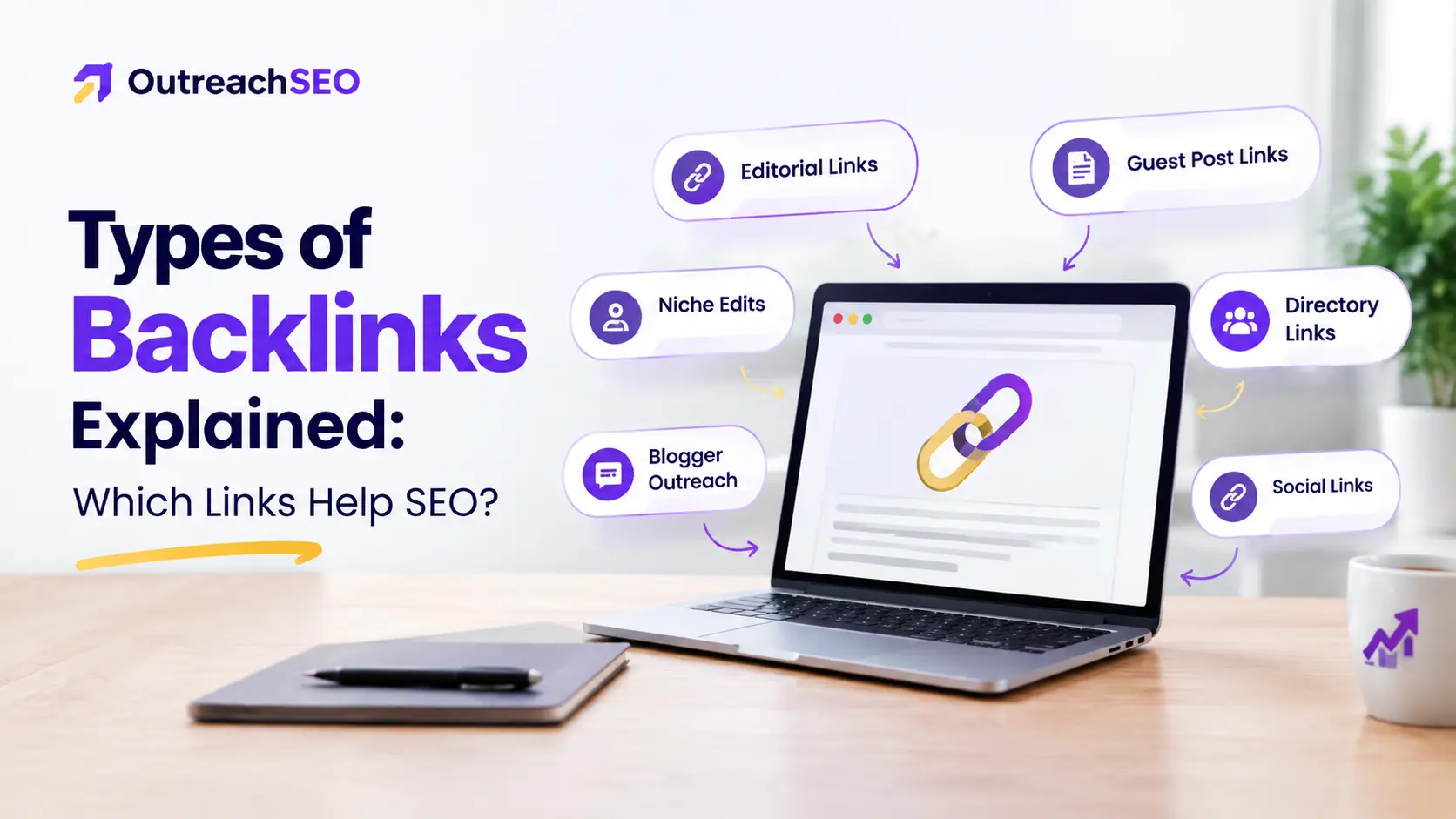

Types of Backlinks Explained: Which Links Actually Help SEO?
What are the types of backlinks? The main types of backlinks are dofollow, nofollow, sponsored, and UGC links. You can also sort them by how they are earned, such as editorial, natural, and guest post backlinks. Quality matters most. High-quality backlinks come from on-topic, trusted sites. Toxic backlinks come from spammy ones.
Here’s a common mistake in link building. A site owner hears that backlinks matter, so they grab every link they can find. Months later, the link count looks great, but rankings haven’t moved. The problem is simple: they collected the wrong types.
Not every link is worth having. Some lift your rankings, some do nothing, and a few can cause real trouble. This guide walks through each type in plain words, so you can see how it works, what Google says about it, and where your time pays off. (New to the topic? Start with why backlinks are important, then come back.)
Key takeaways
- A link’s tag (dofollow, nofollow, sponsored, UGC) is only one lens. How the link was earned matters more.
- Editorial and natural contextual links from on-topic, trusted sites help most.
- Guest post backlinks work when the site is real and fits your topic.
- Toxic backlinks rarely need action, unless you built them or Google flags them.
- A healthy backlink profile has variety, not just volume.
What Are the Main Types of Backlinks?
Here is a quick map of the different types of backlinks.
| Backlink type | What it is | Does it help SEO? |
| Dofollow | A normal link with no special tag | Yes. It can pass ranking credit |
| Nofollow | A link tagged to say “don’t vouch for this” | Sometimes. Google treats it as a hint |
| Sponsored | A paid link, tagged as an ad | Mostly traffic and brand value |
| UGC | A link in a comment or forum post | Low direct value |
| Editorial | A link an editor chose to add | Yes. The best type |
| Natural | A link you earned without asking | Yes |
| Guest post | A link in an article you wrote for another site | Yes, if the site is on-topic |
| Contextual | A link inside the body text | Yes. Stronger than footer links |
| High quality | An on-topic, trusted, earned link | Yes |
| Toxic | A spammy or manipulative link | No. It adds risk |
These backlink types overlap. One link can be dofollow, editorial, and contextual all at once. That’s normal.
Think of the labels as three lenses. The first is the tag on the link. The second is how the link was earned. The third is how good the link is.
What Are Dofollow and Nofollow Backlinks? (Types by Link Tag)
The tag is a small label in the link’s code. It tells search engines how the site feels about the link.
Dofollow backlinks
A dofollow link has no special tag, because that’s simply the default for links on the web. Search engines can follow it and pass ranking credit.
For years, dofollow backlinks were the main goal of link building. They still matter. But Backlinko points out they are no longer the whole picture. Context and relevance now count for more than the tag alone.
Nofollow backlinks
A nofollow link carries a rel=”nofollow” tag. It once told Google to ignore the link for ranking. That changed in 2019. Google now treats nofollow as a hint, not a strict rule.
So nofollow backlinks can still help. They can send visitors. They can build brand awareness. And a Semrush study of 1,000 domains found they performed almost the same as dofollow links in AI search results.
Sponsored links
Google asks site owners to mark ads and paid placements with rel=”sponsored.” The tag tells Google the link is an ad, not an endorsement.
A properly marked paid link is allowed. It rarely passes much ranking credit. Its value is traffic and brand exposure.
UGC links
UGC stands for user-generated content. Think comments and forum posts. Google recommends tagging these links with rel=”ugc.”
The site owner adds the tag, not you. These links carry little direct SEO value.
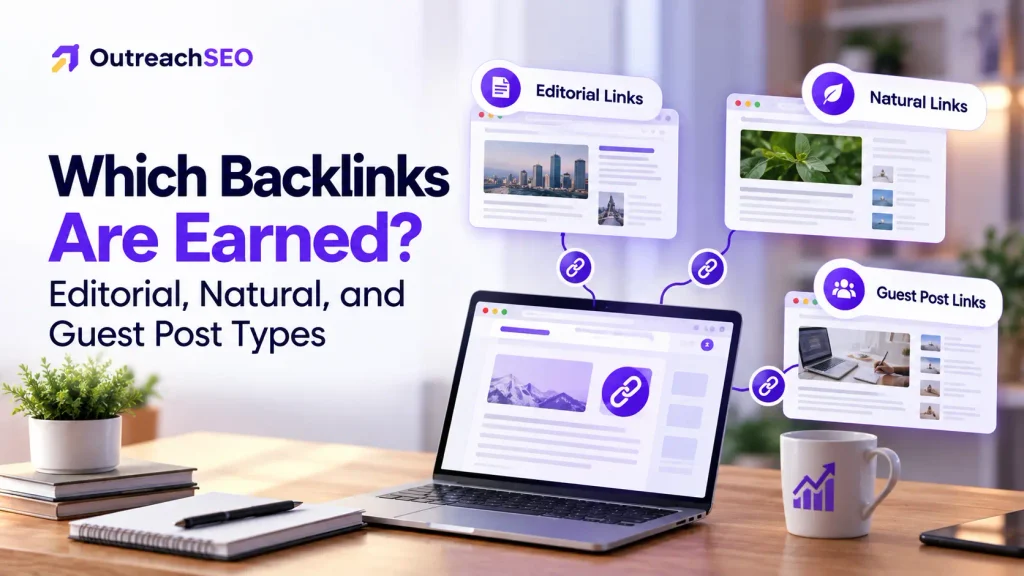
Which Backlinks Are Earned? Editorial, Natural, and Guest Post Types
This is where the real differences show up. Two dofollow links can be worlds apart. It depends on how they got there.
Editorial backlinks
Editorial backlinks are links an editor or writer adds because they help readers. A journalist cites your research, or a blogger points to your guide as a good source, and nobody paid or traded for it.
Backlinko calls earned editorial links the gold standard. It’s what Google’s first big idea, PageRank, was built to reward.
You earn them with things worth citing. Original data, expert quotes, and free tools all work well.
Natural backlinks
Natural backlinks happen on their own: someone finds your page, likes it, and links to it without you ever asking.
Here’s an example. Wistia’s State of Video report has earned over 4,000 backlinks from more than 1,000 referring domains, according to Backlinko. Writers needed the data, so they linked to it.
Most sites can’t rely on natural links alone. Great content still needs a push to get seen. That’s where outreach comes in.
Guest post backlinks
Guest post backlinks come from articles you write for another site. The site gets fresh content. You get a byline and a link.
Is that allowed? Yes, with care. Google has said it has no rule against guest posting. But it has warned about large campaigns built only to place keyword-heavy links. Done at scale across random sites, it can be treated as a link scheme.
A safe guest post has a few things in common:
- The site fits your topic.
- The site has real readers and real editors.
- The article is useful on its own.
- The link is natural and points to something helpful.
- You aren’t posting on a site that takes anything for a fee.
Other backlink types you’ll see
A few more types show up in most profiles:
- Listing links come from business listing sites.
- Profile links come from social and author profiles.
- Image links come from clickable pictures, like charts.
- Press release links come from news-wire stories.
- Forum and comment links come from community posts.
Each one has its own quirks. We answer the most common questions about them in the FAQ below.
What Are Contextual Links, and Why Does Placement Matter?
A contextual link sits inside the main text of a page. It has words about your topic around it. A footer, sidebar, or menu link does not.
Why does this matter? Because Google reads the whole picture, and Backlinko explains that a link’s value depends on three things matching your topic: the page, the text around the link, and the anchor text.
Here’s a simple example from their guide. A brand that makes energy gels got a link inside a Runner’s World article about fueling long runs. The topic, the words, and the brand all lined up. That link is worth far more than one from a big site with no connection.
Contextual links can be dofollow or nofollow. The placement is what makes them strong.
What Makes High-Quality Backlinks Different From Toxic Backlinks?
Now for the most important split: some links help you, and some can hurt you.
What high-quality backlinks look like
Run any link through four quick questions:
- Would a real reader click it? The link should fit the topic and help the person reading.
- Does the site look real? Check for search traffic, named authors, and clear editorial rules.
- Do other good sites link to it? A trusted site is often cited by other trusted sites.
- Did someone choose to add it? A link given freely beats one that was bought or swapped.
High-quality backlinks pass all four. Backlinko also notes that links from 100 sites beat 1,000 links from one site.
What toxic backlinks look like
Toxic backlinks are links that are low in quality or built to trick Google. “Toxic” is a term SEO tools use. It isn’t an official Google label. But the problems it describes are real:
- Links from private blog networks (PBNs) built only to pass links
- Links from link farms and hacked sites
- Paid links that are not tagged as paid
- Excessive link swaps
- Spammy comment links
- Links from unrelated pages, repeated with the same keyword anchor
Do toxic backlinks hurt you?
Often less than people fear. Google says it can judge which links to trust in most cases, so most sites don’t need to act.
The risk is bigger when you or an agency built the bad links on purpose. Then a manual action for unnatural links is possible. Google’s advice is clear. First, try to remove the bad links. Then, if you can’t get them removed, use the disavow tool. It’s meant for sites with a considerable number of spammy links, not for a few odd ones.
What Does a Healthy Backlink Profile Look Like?
Your backlink profile is the full set of links pointing to your site. It covers each linking site, each page they link to, the anchor text, and the mix of link tags.
A healthy backlink profile has:
- Links from many different sites, not just a few
- Mostly on-topic, trusted sources
- A mix of dofollow, nofollow, sponsored, and UGC links
- Varied anchor text, not one keyword repeated
- Steady growth, without sudden spikes of spam
How to audit your profile in five steps
- Export your links from Google Search Console or a backlink tool.
- Group them by linking site.
- Label each group by type, such as editorial or guest post.
- Flag anything that looks spammy or off-topic.
- List the gaps. Which types are missing? Which topics?
Then you know what to build next.
Which Types of Backlinks Help SEO Most?
Google doesn’t publish a ranked list. But based on what the research and Google’s guidance point to, here’s a practical order:
- Earned editorial and natural contextual links from on-topic, trusted sites.
- Guest post backlinks on sites close to your topic, with real readers and editors.
- Nofollow and sponsored links from trusted sources. They bring traffic, brand reach, and AI search presence.
- Directory, profile, and other basic links. They fill gaps but carry little power.
- Toxic backlinks. Avoid them. Clean them up if you have them.
This is a judgment call, not an official ranking. But it’s a safe way to spend your time and budget.
How Do You Build the Right Mix of Backlinks?
You don’t need every type. You need the right ones. Most strong profiles are built on three steady moves:
- Create something worth citing. This earns editorial and natural links over time.
- Place useful guest articles on sites that fit your topic. This builds guest post backlinks you control.
- Pitch real experts and sources. This adds quoted links inside real articles.
At Outreach SEO, we do the off-page side of this work: guest posting, link building, and content writing. We place well-written content on vetted sites with real readers. We don’t sell guaranteed rankings, because nobody honest can.
If you’re hiring any link building provider, ask four things:
- Can I see the sites before you place anything?
- Do they fit my business?
- Do you use private networks or paid-link farms?
- Which link tags will the placements use?
Honest providers answer all four.
Types of Backlinks FAQ
What is a good ratio of dofollow to nofollow backlinks?
Google has not given an official ratio. A natural profile has both, because real websites link in many ways. If every link is dofollow, the profile can look planned, while a mix looks like organic growth. Focus on link quality first and let the ratio fall where it falls.
How many guest post backlinks should I get each month?
There is no safe number that fits every site. Google’s worry is large campaigns, not guest posting itself. A steady pace of on-topic posts on real sites looks natural, while a sudden burst on dozens of random sites does not. Start small, check each site’s quality, and grow only as your content can support it.
Do .edu and .gov backlinks carry extra weight?
Not by default. Google has said in the past that it doesn’t give these endings special treatment. An .edu link can be great when it comes from a real, on-topic page, like a research citation or a resource list. A random student page or a paid .edu “deal” is not worth chasing, and it can count as a link scheme.
Can competitors hurt me with spammy backlinks?
It’s rare. Google’s systems are built to ignore most spam links, so a few bad ones seldom cause harm. Still, check your links report now and then for sudden spikes or odd anchor text. If a manual action ever appears, that’s when Google’s removal and disavow steps come into play.
Do image backlinks count?
Yes. When a picture is the clickable part of a link, Google uses the image’s alt text like anchor text. Clear alt text helps the link say what it points to. Infographics and charts are common ways to earn image links, as long as the image is useful and the credit link is easy to find.
Are Wikipedia backlinks worth getting?
Wikipedia links are nofollow, so they pass little direct ranking credit. Even so, they can send curious readers and add credibility. Backlinko found one outdoor brand with 50 Wikipedia links, all nofollow. You can’t buy these, and promotional edits are often removed fast, so a link only stays when a solid source backs it.
Do press release links help SEO?
Rarely in a direct way. Many wire sites tag links as nofollow or copy the same text across many pages. The real value is reach. A story picked up by real news sites can earn editorial links. Treat a release as a way to get noticed, not a shortcut to rankings.
Are directory links still worth it?
A few are. Local listings and trusted industry sites help people find you. They show your business is real. Sites built only for SEO and used in bulk are another story. Google’s link scheme guidance lists low-quality directory links as a problem.
Are forum and blog comment links worth it?
Rarely for rankings. These links are often tagged nofollow or ugc, a fix that began as a way to fight comment spam. Real help is different. A useful answer in a group on your topic can bring visitors and make your name known. Never drop links just to get a link.
How often should I check my backlink profile?
A quick check once a month is enough for most sites. Look at new links, lost links, and anything odd. Do a deeper audit every quarter, or after a big campaign, so you can sort links by type and spot gaps. Check right away if your rankings drop suddenly.
Final Thoughts
The best links are on-topic, earned, and placed in real content. Every other type is a supporting player, or a risk to manage. Know what’s in your profile, build the right mix, and keep it steady.
Want help building a clean, balanced backlink profile? Outreach SEO focuses on guest posting and link building. With 5,000+ placements across 2,000+ vetted sites for 1,000+ clients, we know what a good link looks like.